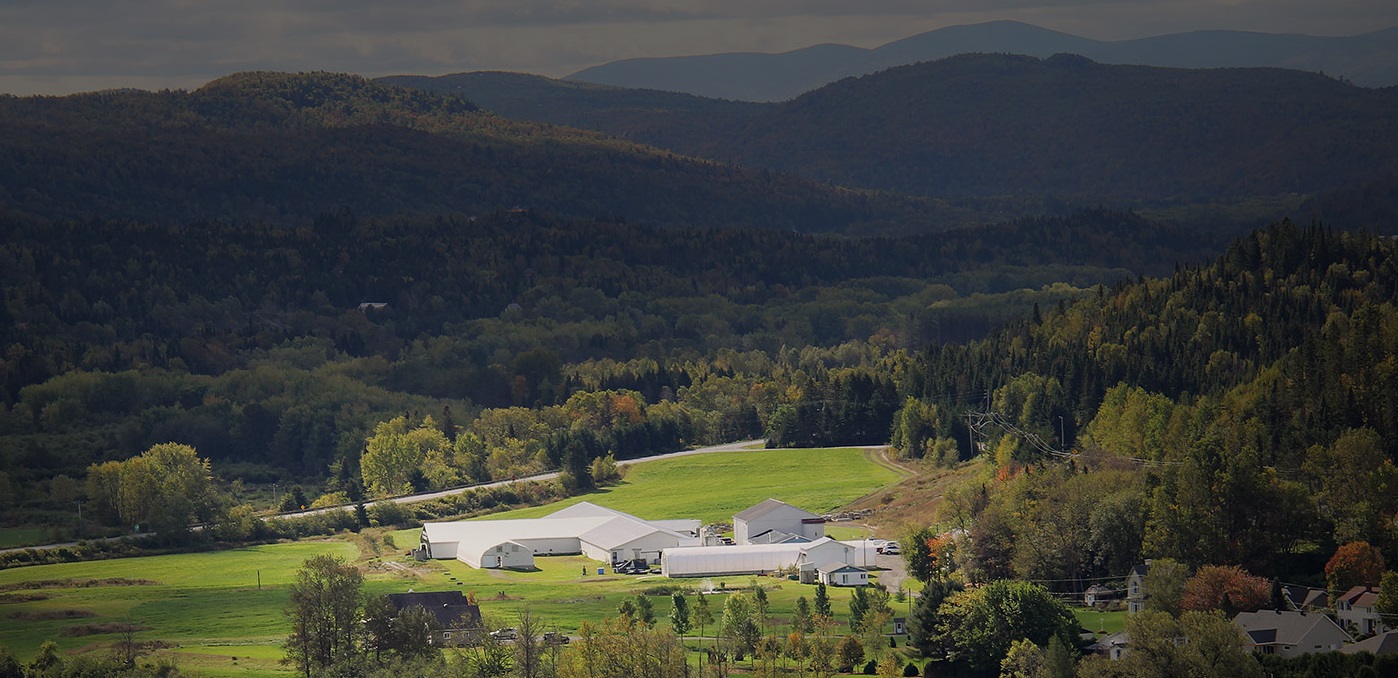
The Ferme Piscicole des Bobines
The Ferme Piscicole des Bobines is a family-owned aquaculture business located in East Hereford, Québec. Founded in 1975 by Normand Roy and Doris Brodeur, the company began modestly, raising trout in small pools in the basement of the family home—an early experiment driven by curiosity, determination, and a desire to build something different.
Over the decades, through perseverance and continuous improvement, the farm has grown into one of the most important trout producers in Québec. Still operated by the family, with the next generation actively involved, the company has preserved its original spirit: a hands-on, hard-working approach combined with a deep commitment to quality and local production.
What distinguishes the Ferme Piscicole des Bobines is not only its scale, but the intelligence of its development. Faced with environmental challenges and evolving industry expectations, the team chose to invest early in innovative aquaculture practices, including recirculating systems that reduce water usage, improve control over production, and significantly limit environmental impact.
Today, the farm operates year-round and relies on tightly controlled water temperatures to ensure optimal fish growth, health, and product quality. This creates a constant and critical demand for reliable thermal energy—one that must be met with precision, consistency, and resilience.
Rackam developed a tailored solution to support this operation, providing a stable, continuous, and cost-effective heat source while aligning with the farm’s long-standing commitment to sustainability and innovation.
A hybrid heating system designed for continuous operation
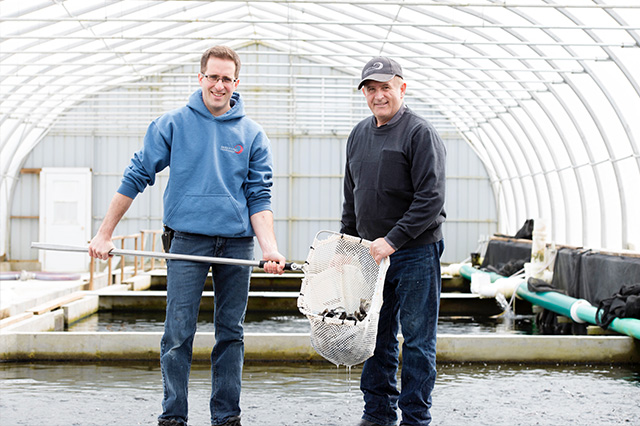
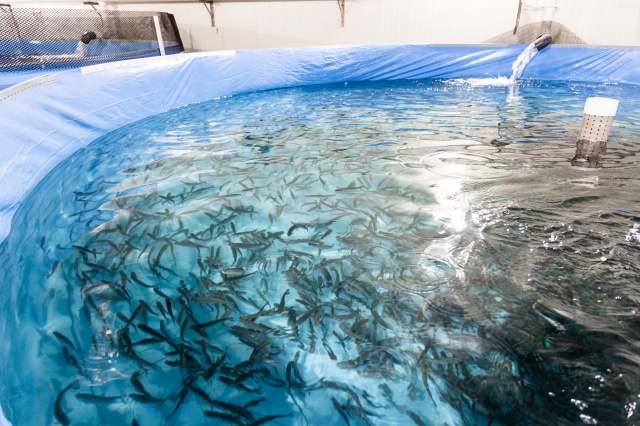
As the Ferme Piscicole des Bobines expanded its operations, Clément and Normand sought an energy-efficient solution to stabilize the temperature across the different stages of their hatchery. Maintaining precise thermal conditions for both early and later growth phases is essential, yet particularly challenging given the large volumes of water continuously circulating through the system.
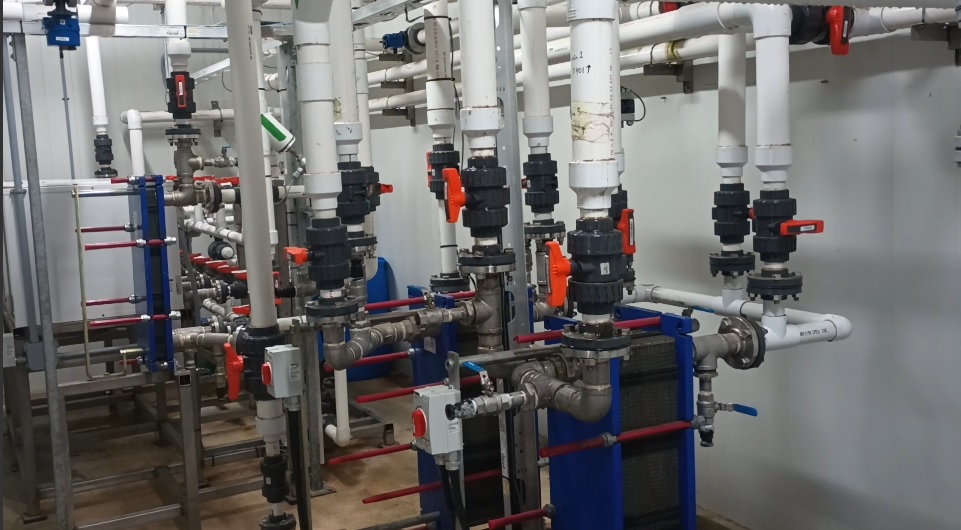
Rather than relying on a single heat source, Rackam developed a three-level approach combining heat recovery, solar thermal energy, and heat pumps as a complement. This strategy makes it possible to deliver a powerful and stable low-temperature heating system, adapted to the scale and dynamics of aquaculture operations.
Aquaculture operations cannot tolerate temperature fluctuations. Any interruption or instability can directly impact production and fish health. To address this constraint, Rackam implemented a hybrid thermal system combining multiple energy sources:
- Heat recovery from existing processes to capture otherwise lost energy
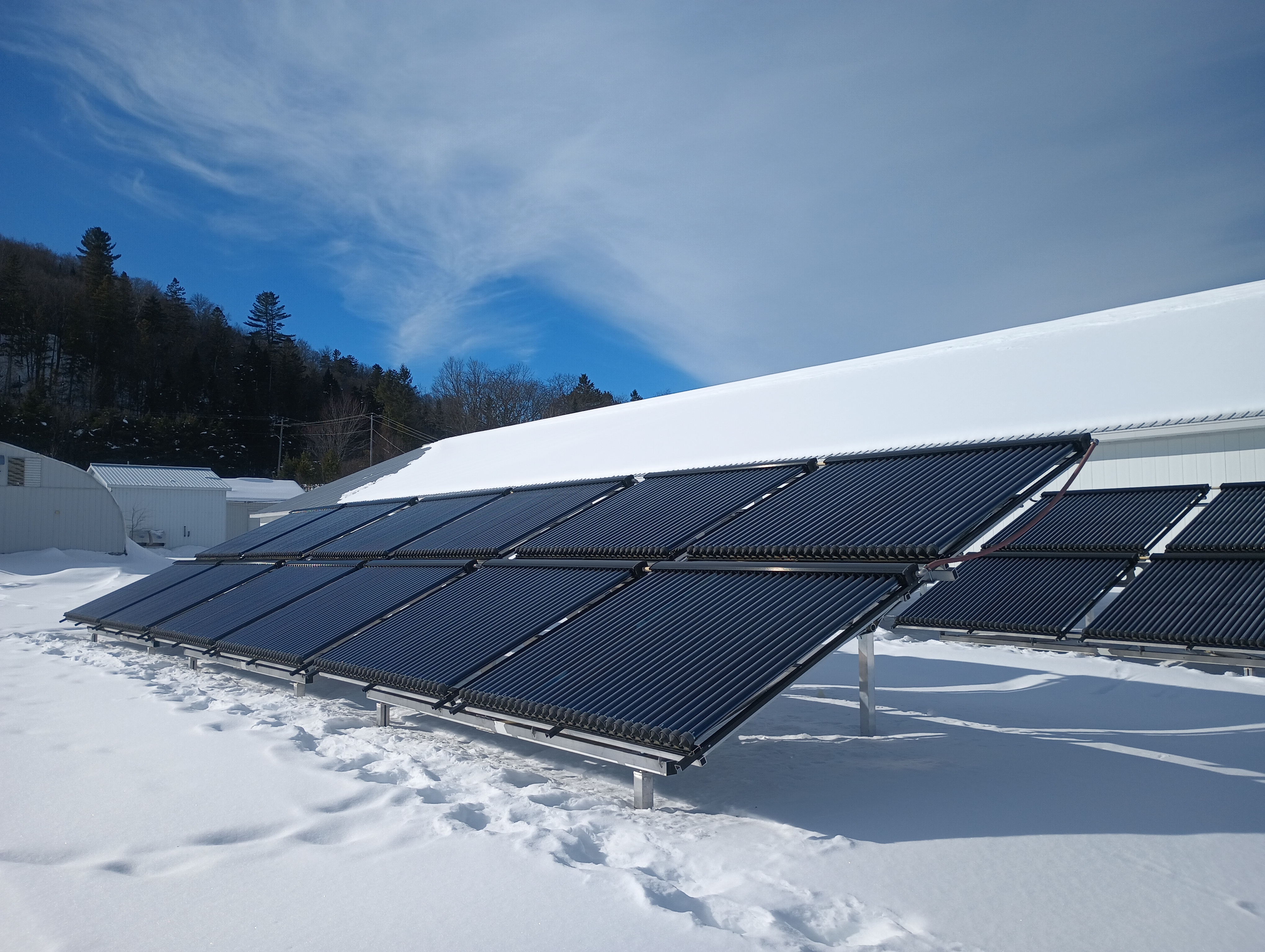
- Evacuated tube solar collectors to provide renewable heat
- Reversible heat pumps to ensure stability and backup capacity
This layered approach ensures continuous heat delivery under all operating conditions, maintaining precise temperature control throughout the year despite varying environmental conditions and operational loads.
Reducing costs without compromising reliability
The system is designed to operate alongside existing infrastructure rather than replace it. Solar energy provides low-cost heat when available, while recovered energy and heat pumps ensure continuity when needed.
This hybridization reduces exposure to energy price volatility and lowers operating costs, while preserving the reliability required for industrial aquaculture.
Tangible results
Beyond improving thermal stability, the system is designed to generate measurable operational benefits over time. By combining heat recovery, solar energy, and heat pumps in a complementary manner, the project reduces the energy required to maintain the hatchery at its target temperatures.
The graph below illustrates example yearly savings associated with the system. As measured operating data becomes available, this section can be updated to reflect the project’s actual performance.
Energy produced (KWh)
A scalable model for low-temperature industrial heat
The Ferme Piscicole des Bobines project demonstrates how solar thermal energy can be effectively integrated into processes requiring continuous, low-temperature heat.
It provides a practical and scalable model for similar applications, where reliability, simplicity, and cost control are essential. By combining solar capture with complementary technologies, the system delivers measurable performance while supporting long-term decarbonization goals.