A renewable heat solution for modern aquaculture
Aquaculture operations require continuous thermal energy to maintain stable water temperatures, ensure fish health, and support growth performance throughout the year. In cold climates especially, heating represents a major operational cost and a key environmental challenge.
Solar thermal technology can significantly reduce fossil fuel consumption by providing renewable low-temperature heat directly to aquaculture processes. Because temperature requirements are moderate, solar systems can achieve high operational efficiency when properly integrated into the facility’s thermal architecture.
System operation principle
In aquaculture applications, the objective is not to deliver very high temperatures, but rather to provide reliable and efficient heat production under variable climatic conditions, including winter operation.
For this reason, evacuated tube solar collectors are often favored. Their superior thermal insulation allows efficient heat production even during cold ambient temperatures and low solar irradiation.
A typical integration strategy includes several complementary energy flows:
- Heat recovery: approximately 10 % of the water in fish farming systems must be continuously renewed. Warm discharged water can be circulated through heat exchangers to preheat incoming fresh water.
- Solar heat contribution: solar collectors provide available renewable heat to the process during daytime operation.
- Thermal storage: buffer tanks stabilize supply and improve solar utilization.
- Heat pump balancing: during night operation or low solar availability, heat pumps provide the remaining heat required to maintain process temperatures.
This hybrid architecture enables high solar fractions while ensuring full operational reliability.
System block diagram
This diagram shows the main thermal energy flows and integration logic of the installation.
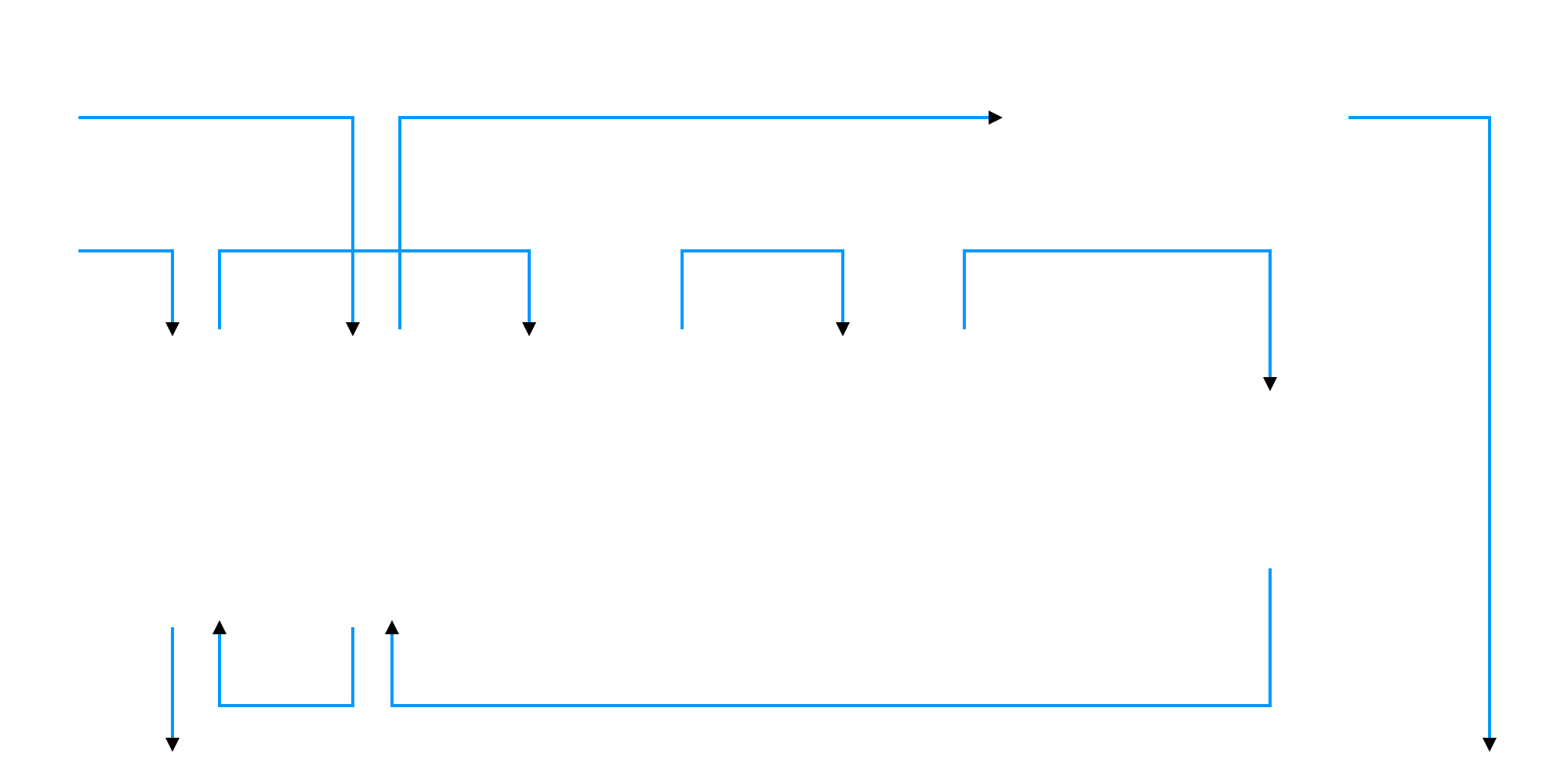
| # | Component | Description |
|---|---|---|
| 1 | Second stage heat recovery | Final heat extraction from discharged water to maximize energy recovery before rejection. |
| 2 | First stage heat recovery | Primary heat exchange stage preheating incoming fresh water using warm effluent streams. |
| 3 | Evacuated tube collectors | Solar thermal collectors providing renewable low-temperature heat to the system. |
| 4 | Heat pump | Supplemental heating ensuring temperature stability during low solar availability. |
| 5 | Fry hatchery | Early-stage fish production requiring precise and stable temperature control. |
| 6 | Small fish pools | Intermediate growth stage where consistent thermal conditions support fish development. |
Benefits for aquaculture operators
Integrating solar thermal heat into fish farming facilities offers multiple advantages:
- Reduced exposure to fossil fuel price volatility
- Lower greenhouse gas emissions
- Improved temperature stability in fish tanks
- Modular expansion aligned with production growth
- Long equipment lifetime and low maintenance requirements
Because heat demand is continuous and predictable, aquaculture represents one of the most favorable industrial sectors for solar heat deployment.
Example of application — Ferme Piscicole des Bobines (Canada)
At Ferme Piscicole des Bobines in East Hereford, Quebec, a solar thermal system has been implemented to support water temperature regulation and building heating loads.
The installation integrates renewable heat production with existing infrastructure, combining solar collectors, heat recovery systems, thermal storage, and heat pumps. This hybrid configuration allows progressive reduction of conventional energy consumption while maintaining stable operating conditions for fish production.
This project demonstrates how decentralized solar heat systems can strengthen the sustainability and economic resilience of rural aquaculture operations.
Replication potential
Similar system architectures can be deployed in:
- Fish hatcheries and recirculating aquaculture systems (RAS)
- Shrimp and warm-water fish production facilities
- Greenhouse-aquaculture integrated farms
- Food processing facilities requiring low-temperature heat
By adapting collector technologies, storage sizing, and hybrid control strategies, solar thermal systems can address a wide range of decentralized industrial heat needs.